Wednesday, June 4, 2014

A Malindi Mama

I was being followed.

I knelt, pretended to tie my shoe, and saw her out of the corner of my eye.

I had gone down a side road, an unpaved track that led to Shiek's. At least, that's the name I thought the waiter had given me. I was perusing a menu posted outside an Italian restaurant, when he tried luring me inside. I had binged on Italian food the day before: insalata mista, bruschetta, mushroom risotto, chicken masala, a beef calzone, and gelato. I was hankering for some local fare, so I asked him where I could get some nyama choma.

"Eh?"

"Nyama choma," I said. "Where can I get some?"

"You want nyama choma?" he said, smiling.

"Yes."

He pointed down a side road. "You go down there," he said. "Turn left, and Shiek's is just there."

"Shiek's?"

"Yes."

I turned left onto Ganda Road, and that's when I first saw her about thirty yards behind me.
I had a bad feeling about Malindi the minute I stepped off the bus. I was ambushed by touts and beach boys, all clamoring for my attention. I'd had plenty of experience with touts before, but these young men were shrill, desperate. I pushed past them and escaped down Kenyatta Road to look for a place to stay.

I splurged and paid for a bungalow at Seaview Resorts. My room was spacious and breezy, with a fan and a defunct television set. I took my first hot-water shower in days and washed my mouldering clothes in the bathtub. I was on the back patio, hanging my damp clothes on the furniture and railing to dry, when I heard a woman titter and say something in what sounded like Italian. I leaned over the railing and looked at the neighboring bungalow. There, on the back patio, an elderly, bikini-clad European woman was on a deck chair entwined with a young, muscular Kenyan man in a white Speedo.

I was shocked. Not because of their age difference. Nor because it was an interracial coupling. No, I was fairly certain this was prostitution. While I had heard that prostitution was notorious on the coast, I had never expected to encounter it so vividly.

Male prostitutes on the coast had it much easier than their female counterparts, so at the time I excused the elderly woman's actions. More power to her, right? In hindsight, though, she was only helping to justify the more nefarious practice of female prostitution. Most women, or girls, entered the trade in their teens. Some entered before they were even twelve years old. And terrible things sometimes happened to them. Most girls made five times more in a day than the average Kenyan, so not surprisingly family members often encouraged their daughters to enter into the practice.

The girl following me to Shiek's looked young. Definitely in her teens. She wore a red halter top and dark blue jeans, and her hair was done up in European fashion, short, straight and bobbed. I wondered if the waiter at the Italian restaurant had sent her after me, perhaps thinking I had been talking in code.

I saw a sign ahead for a kinyozi (barber). In my gluttony the day before, I had failed to find a barbershop, so I was still sporting the monkish haircut under my hat. As I turned down the side road, I spotted the girl once again out of the corner of my eye. Perhaps she would give up the chase while I got a haircut.

The kinyozi was closed, but next door was a beauty salon, so I stepped inside. A portly woman with a bountiful smile full of big white teeth said, "Karibu!"

"Asante," I said, and I asked her when the kinyozi would open.

"You want a haircut?" she said.

"Yes."

"You sit down here," she said, pointing to a chair. "I give you a haircut."

"Do you have a razor?"

"Razor?"

I lifted my hat off my head.

"Aiiiii," she exclaimed. "Does it hurt?"

"Not anymore."

She commanded me to sit down. I did. She fastened a sheet around my neck. Then she dug through a drawer to produce an electric razor. Within five minutes, she had my head shaved. She held up a mirror before me. I ran a hand along my stubbled head.

"Looks good."

I then realized we had not settled on a price beforehand. Big mistake. She could name any price she wanted. And she did.

"Two thousand," she said, when I asked.

"Shillings?!"

"Yes."

That was the mzungu rate, but I was no mzungu anymore. I told her I had paid only two hundred shillings for a haircut in Kericho.

"This is Malindi," she said, smiling broadly.

I told her I wouldn't pay that much.

"You pay me one thousand," she said.

"Five hundred."

"Sawa."

"Sawa."

I had haggled well, but I walked out of the salon feeling cheated nonetheless. Sure enough, waiting at the corner, seated on a curbstone, was the girl who had been following me. I crossed to the far side of the street and quickly regained Ganda Road. I did not look back.

A few blocks down was Chic's Bar and Restaurant, an open-air establishment with wooden picnic tables in rows beneath makuti shelters. I was the only one there. The place seemed abandoned, until I heard the clattering of pots in the kitchen.

I sat at a table and waited. Sure enough, the girl appeared at the entrance. She spotted me at the corner table and walked toward me. She sat shyly at the far end, across from me, and mumbled something I did not understand.

"Pardon?"

"Do you have a mama?"

Immediately, I thought of my mother in Illinois. "Yes," I said, without sarcasm. And then I realized what she had meant. My first reaction was one of anger. I was furious that she would think I would engage a prostitute. My face must have betrayed my feelings, for she suddenly looked despondent.

I thought I should say something, but I did not want to protract the situation. So I sat there silently. She sat there silently. And sat. And sat.

Eventually, I retrieved my journal from my backpack. My head bent over its pages, in some strange form of symmetry, I began writing about my current situation: I am sitting in Chic's Restaurant. A young woman I believe to be a prostitute is sitting at my table right now. She asked me if I have a "Mama," to which I said yes, but she hasn't said anything since.

I looked up from the page. She sat there looking desolate. She was definitely young, perhaps sixteen, and from this proximity I could tell she was wearing a wig. Her lips were painted a burlesque red and her face was powdered to conceal the pockmarks on her cheek. I wondered if she would be in trouble for failing to get any business from me, and I imagined the waiter at the Italian restaurant beating her in a back alley. Strangely, I imagined her wig flying off her head as the waiter struck her.

I thought about giving her some money, but that would only encourage her situation. Then, immediately, I thought I was being high minded, a privileged Westerner. And that made me angry again, to have been put in this situation involuntarily.

All this time, no one from the restaurant had acknowledged my existence, and I wondered if the young woman's presence was causing a delay. I stood. My head hit a supporting beam of the makuti shelter. I gasped, winced, fell back in my seat, and held my head in my hands.

My forehead throbbed dully. The girl had covered her mouth with her hands, but her eyes betrayed the smile beneath. I thought of yanking the hat off my head, to show her my bandaged wound, but I would only be making more of a fool of myself.

Finally, a woman emerged from the kitchen, carrying a menu. She set it on the table before me and looked uneasily at the girl across from me. They spoke in Swahili, none of which I understood, but I could tell the girl was being interrogated. Their conversation gradually became heated, with the server occasionally pointing at me. Finally, she waved the girl away.

"Enda!" she said, and she watched her until the girl was out of view. 

The woman turned to me indolently and waited wordlessly for me to order. I wanted to tell her I was not the least bit interested in prostitutes, but hers was a stare I would come to know well in Kenya. This was a woman who had had many dealings with foreigners, and not many of them were pleasant ones. I was just another mzungu, in her eyes.

Since the place was completely empty, it suddenly occurred to me that the restaurant might be closed.

"Are you open?"

"Yes."


"Do you have nyama choma?"

"Yes."

"I will have nyama choma with sukuma and ugali, tafadhali."

"To drink?" she said, sliding the menu off my table.

"Tusker."

"Sawa."

I gorged myself on nyama choma and ate the whole platter of roasted goat, along with the sukuma and ugali. My stomach distended, picking gristle from between my teeth with a toothpick, I realized I had handled the situation with the girl very poorly. But I don't know what I could have done differently. I could have been sympathetic to her plight, engaged her in some conversation, but I like to think I acted the way most people would. Several years previous, when a young man accidentally stepped in front of my vehicle, forcing me to slam on the brakes, my first reaction was, "You stupid son of a bitch!" He had not meant to step in front of me, that was apparent from his apologetic expression, but my first reaction was anger. How dare you almost burden me with your death?


If I had not already paid for a second night at Seaview Resorts, I would have left Malindi immediately. Instead, I resolved to leave for Nairobi early the next morning. Nairobi was no paradise, but at least it did not pretend to be, and its utter honesty about itself suddenly attracted me. It was time to return to more arid climes.

(To be continued)

Saturday, May 24, 2014


A Lonely Road

"There is room," the tout insisted.

The matatu was bursting at the seams with passengers.

"Where?"

The tout looked over the heads of his customers, searching vainly for an empty spot, then he shoved a few people further inside and pointed down at one of the steps.

"There."

He gripped the back of my arm and tried forcing me aboard. I dug my heels in. "No."

He made a hissing sound, dismissed me with a wave, and then banged the side of the matatu with the flat of his hand. "Enda!" And they were off.

I had been standing at the same corner for more than an hour, waiting for an acceptable ride. It was obvious one would not materialize. Not this morning. I must lower my expectations.
Like the others, the next matatu to wobble toward me was overloaded. But from my discerning eye it did look relatively new, somewhat dignified, unlike the others, which sagged from broken suspensions. Or heaved and lurched like boats on a choppy sea.

You are the one, I said to myself.

The tout jumped off the back fender before the matatu had come to a full stop, a maneuver, I am sure, which would have planted me face first on the pavement. He, however, commenced a graceful jog alongside the vehicle.

"Wapi?"

"Shimoni," I said.

He grabbed my backpack and tossed it swiftly onto the roof of the matatu. I peered through the door. Sardines.

"Wapi?" I asked.

He pointed vaguely inside. I looked again.

"Hapa," I said, pointing at the rear bumper, and before he could answer, I jumped on. The tout laughed and slapped the side of the vehicle. A jolt, and we were off, hurtling down the road toward the turnoff to Shimoni. I clung to the luggage rack for dear life. We stopped a few more times to pick up passengers, who somehow managed to squeeze inside, and each time the tout would laughingly comment about the crazy mzungu, while pointing at me. Halfway to the turnoff, at a busy stop, enough passengers had disembarked so that I could wedge myself inside.

"So, you want to be a tout?" an elderly gentleman said to me. An explosion of laughter.

I smiled. "It doesn't pay enough."

"That is good," the gentleman said. "You should not take jobs from Kenyans."

More laughter. The remainder of the ride was cheerful, and I answered the older gentleman's many queries. Then, the tout stuck his head through the door and said, "Hapa."

I wriggled my way out of the matatu, jumped onto the pavement, and retrieved my backpack. The matatu sped off, burping diesel fumes, and left me standing alone at the turnoff to Shimoni. According to The Rough Guide, I had an eight-mile hike ahead of me, so I set off at once down the dirt track.

It was a long, lonely walk. A few miles in, I was parched and weary and rested a few minutes beneath the shade of a palm tree. Something was odd, and when I thought about it, I realized I had yet to see a soul. I knew a town existed at the end of the road, but there was no vehicular or foot traffic in either direction the entire time. I had seen distant huts through the trees, but no people. 

I trudged on and then thought about how far away Christy was at the moment. She had gone home to Missouri for several weeks for the holidays. I imagined her with family, and felt a little wistful, especially with Christmas approaching. There was a time when my hometown was all I needed to know of the world. I had explored every nook and cranny of Elk Grove Village, Illinois, even Busse Woods and the industrial park, which, because of its proximity to O'Hare Airport, was one of the largest in the world and very attractive to children. 

I left Elk Grove for Southern Illinois University only because it was expected of me. The day I packed my belongings into the family car, and my father drove me six hours to Carbondale, was my cleaving. But I did not know this as I gazed forlornly out the window of my dorm room, watching my father's dwindling figure recede in the distance.

I had begun traveling my own road, and one road would lead inexorably to another.

The road I was now on eventually led to Shimoni, a sleepy coastal town with a cement pier jutting about one hundred yards out to sea. To get to Wasini Island, my destination, I needed a ride, so to the pier I went and reserved a seat on a motorboat to the island.

I paid for a room at a hostel with a well-stocked bar and a restaurant that was legendary for its seafood. In fact, luxury safari outfits dropped off clients at the restaurant just for the meals alone. They never stayed, though, as the accommodations were basic.

The island was Islamic, as was its architecture. All the doorways were narrow and the lintels at forehead level, so I had to duck to enter or exit any room or building. My room was very basic and contained a bed and an end table. That was all. I did, however, have an ocean view. I tossed my backpack on the bed, retrieved The Rough Guide to Kenya, and headed to the bar for a much-deserved Stoney. 

I walked down the hallway, flipping through pages of The Rough Guide, trying to plan the rest of my day, so I forgot to duck as I exited the building. My forehead slammed into the lintel's edge, staggering me. It was the only time The Rough Guide would betray me.

The flow of blood was immediate and copious. I stumbled toward the bar, only to be greeted by gasps and horrified looks from the staff. I am sure I looked like Sissy Spacek's Carrie. The bartender rushed toward me and immediately applied a bar towel to my head. Another staff person approached with a rusted bucket full of water that looked as if it had been squeezed out of a dirty mop. He looked ready to pour it over my head, but I waved him off.

The bartender said he knew where to get fresh water. He led me away from the bar, where rows of bottled water stood sentinel on a shelf. We turned a corner between buildings and a young Swedish woman was met by my ghastly countenance. She gasped and covered her mouth, her eyes wide as saucers, as if I were missing a limb. 

"I forgot to duck," I told her.

"Come here," she said, grabbing my arm and leading me away. 

The bartender relinquished care of me. The Swedish woman (her names was Anna, she later told me) took me into her room and began ministering to my wound. She poured bottled  water over my head, and then dabbed and applied pressure with the bar towel. She retrieved antibiotic ointment from the first aid kit in her backpack and salved the wound. Scissors, gauze, tape. In no time, this saving angel had my wound cleaned and bandaged.

"You should go to hospital," Anna said. "You might need stitches."

Out her window, the sun was already low in the sky. As if reading my mind, she said, "It is too late now. You must leave in the morning."

I thanked her profusely. At dinner, about an hour later, I bought her a bottle of water to replace the one she had used to clean my wound. I was so dazed, so fixated on the dull ache of my head, that I could not savor the famed seafood dinner. The bartender told me I had to be in Shimoni no later than 8 a.m., as that was when the last matatu left for the main road. Remembering that long, lonely hike, I believed him. I asked him why there were no matatus after eight.

"Nobody leaves Shomini," he said, "except matatu drivers."

I lay in bed that night, my head throbbing, realizing I had traveled this far to see Wasini only to be leaving without having experienced anything but the hostel and its renowned restaurant. I made it to Pandya Memorial Hospital in Mombasa late the next morning. I was impressed by the facility, and I told the nurse ministering to my wound as much. 

"Mistah Reech-ahd," she said, in a dignified tone, "we perform surgery here."
Aghast, I thought she meant that I was going to require surgery, but then she said, "We even give our patients anesthesia before we operate on them."

Sarcasm. I apologized and told her I meant well.

"I must shave you," she said.

She retrieved a razor from a cabinet, sterilized it, and began shaving the hair around my wound. A few minutes later an Asian man with graying hair and a Hitler mustache walked in. He looked at the wound and quickly proclaimed I would not need stitches.

"None?"

"None," he confirmed.

He retrieved a hand mirror to show me the wound, a vicious-looking knot with a two-inch gash. What worried me more, though, was that I looked like a monk, as my hairline had been shaved back several inches.

"Can you at least shave the rest of my head?"

"Mistah Reech-ahd," the nurse said, "this is not a barbershop."

Luckily, I had a hat. I left the hospital at mid-afternoon. Sweltering heat. By the time I reached downtown Mombasa, every article of clothing was soaked through with sweat, even my hat. I had not eaten since dawn, a mandazi and a cup of coffee, so I stepped into a restaurant for a late lunch. 
The dining area was open, airy, with cement walls and floors. I soon began shivering in my damp clothes. Teeth chattering, I ate my nyama choma, sukuma, and ugali, while flipping through pages of The Rough Guide, deciding on my next destination.

I settled on Malindi, a coastal town north of Mombasa. Malindi was popular with Italian tourists, so it had some of the best pizzas, pastas, and ice cream in all of Kenya. And it had a reputation for hospitality to strangers, ever since Vasco da Gama was welcomed warmly by the king of Malindi in 1498.

What could possibly go wrong there?

(To be continued)

Friday, May 16, 2014

Mombasa, a Mango, and a Monkey

The bus terminus was empty except for a few other Westerners waiting for night to break, for faint predawn light to settle on the streets. I shouldered my backpack, glanced at the young blonde-haired man next to me as he peered anxiously out the doorway, and stepped out onto Moi Avenue.

I headed east, toward the city center and the hotel where I was to meet Michelle, Ross, and Shirley. Already, the air was muggy, and by the time I reached the ivory arches welcoming travelers to downtown Mombasa, my shirt was soaked through with sweat. 

I had spent ten hours on a bus traveling on one of the most dangerous highways in the world, the A109, or the Nairobi-Mombasa highway, a roadway littered here and there with the desiccated shells of abandoned vehicles. If I were going to die, I might as well be asleep for it. Most of the time, my eyes were closed, but I was prevented from truly falling asleep by the jolting and shuddering of the bus and the gasps of horrified passengers.

When I reached the hotel, I was utterly exhausted. I searched the lobby, but no sign of Ross, Michelle, or Shirley. They must be late, I thought. I sat down on a sofa and tried to sleep, but I felt the eyes of hotel employees on me. I shouldered my backpack, shuffled outside, and flopped onto a beach chair beneath a palm tree by the pool and fell asleep with an ocean breeze caressing me.

When I woke, I felt I had been out for hours, but by my watch I had been asleep less than twenty minutes. I went back inside and ordered a small pot of coffee. Half an hour later, still no sign of them. I then had the bright idea of checking for a note at the front desk. Sure enough, they had left one. They were taking a boat to Zanzibar that left at 9 a.m. "Meet us there," the note said. I checked my watch. I had half an hour until the boat departed. If I hopped into one of the taxis outside the hotel, I could make it in time. 

I was halfway across the city when I changed my mind. I had three weeks left of Christmas break, and I did not want to spend it missing connections and scurrying to beat time. I wanted to relax and travel at my own pace, so I told the driver to take me to the Likoni Ferry instead. I would spend a few days on the coast by myself.

Christy was in the States, visiting family. We had said our goodbyes the day before, and I already missed her terribly, so I suppose I wanted time to think, as well.

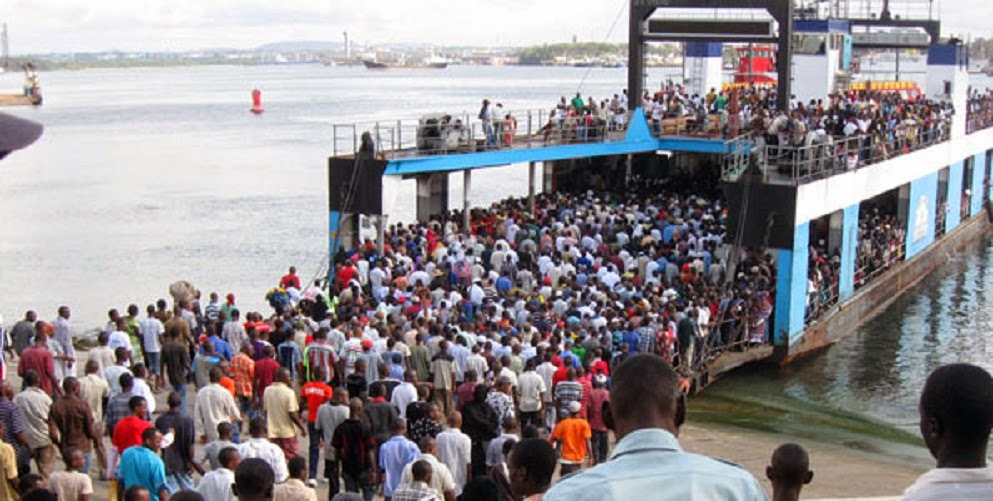
I sandwiched myself in with hundreds of Kenyans on the ferry, a dubious undertaking at the time. A couple of years before, in April of 1994, one of the ferries capsized, killing 272 people aboard. The ferries had also been known to stall and drift out to sea. On this day, however, we made it safely to the mainland.

I trudged along the beach, past expensive hotels and resorts, until I came upon Vindigo Cottages, a wayward, slightly unkempt compound a little overgrown with weeds. Perfect. There, I paid for a two-bedroom chalet, with a full kitchen, overlooking the Indian Ocean. Before I even entered my cottage, an elderly Kenyan man was waiting for me by the front door.

"Please, sah, I buy you dinner," he said.

I was taken slightly aback. "You want to buy me dinner?"

"No, sah, I buy dinner...chakula...and I cook it for you tonight. In there," he said, pointing to the kitchen.

After a few more confused exchanges, I realized he wanted me to give him money, so he could buy food at the market, and make dinner for me in my kitchen.

"How much?"

"Five hundred."

"Five hundred shillings?"

"Yes."

I was a little skeptical, but then I noticed his bicycle propped against a nearby tree. A wicker basket hung form the handle bars and two others served as panniers across his rear tire. I gave him the five hundred shillings and told him my name. His name was Daniel.

"You like fish?"

"I love it."

"I will make fish."

I thanked him. He mounted his bike and pedaled off. I entered my cottage, tossed my backpack on the bed, and trotted down to the beach. I had planned on taking a dip, but a young man named Phillip convinced me to go snorkeling.

"How much?"

"Five hundred."

"Is everything five hundred shillings here?"

"Eh?"

I haggled and we agreed on two hundred shillings. Phillip took me in a dugout boat about one hundred yards out to sea.

"Here," he said.

"The reef is here?"

"The reef is here," he said, and he handed me snorkeling gear.

I had never snorkeled before in my life, so I made many fumbling attempts and came up often gagging on seawater. Phillip, I am sure, enjoyed many laughs while I was under. I got the hang of it, eventually, and managed to stay down for longer and longer periods. I saw clownfish, powder-blue surgeonfish, angelfish, trumpetfish, even a moray eel. During one dive, I was so engrossed, I didn't know I had gone too far. Phillip later told me he had been yelling at me to stop.

Unaware, I had reached the edge of the reef. A yawning abyss lay beyond. Sure enough, I crested a wall of coral and immediately felt the tide pulling me down into a great maw of deep, dark water. I clawed my way back to the surface and scrabbled over the reef, scraping my shins in the process.

When I surfaced, Phillip was there, wide-eyed, eager to pull me in.

"Don't go there," he said.

"I'm done."

If you've been cut by coral, you know how painful it can be. The scrapes were not very deep and did not produce a lot of blood, but my shins were on fire. I crawled back up the beach to my cottage and nursed my wounds with a cold Tusker. I dropped into a hammock on my back porch, in the shade of a makuti shelter, and relaxed to the susurrations of the sea. I woke a few hours later with half a bottle of warm beer resting in my lap. Daniel was by the back door, dismounting his bicycle. His arrival must have wakened me. He pulled a string of three fish from his front basket.

"Samaki," he declared.

I suspected he had fished for them rather than buy them with the money I had given him. He then pulled sisal bags full of fruit and vegetables from his panniers. I could see the balding head of a coconut sticking out of one.

Daniel immediately began work in the kitchen, while I popped down the road to a mini-market to buy a bottle of wine. I returned to the unmistakable aroma of grilled fish. Daniel was grating the coconut into a pot of rice. Fifteen minutes later, around sunset, I sat down to an exquisite meal of fish kebabs with coconut rice and flaky chapatis. There was enough food for the two of us, but Daniel refused to eat with me. He retreated instead to the kitchen and began cleaning up pots and pans.

Sated, I poured a glass of wine, leaned back in my chair, and listened to waves breaking on shore. Daniel came out to collect my plate. I praised his cooking, gave him an extra five hundred shillings, and told him he should open a restaurant. He beamed, thanked me, and then reached into his pannier to produce a mango.

"For breakfast," he said.

I thanked him and accepted the mango.

"You must put it in the icebox," he said.

I asked why, and he pointed to the thatched roof. "Monkeys."

Sure enough, a colobus monkey was perched on one of the rafters. Our eyes met, and it bared its teeth and disappeared through the thatching.

"They steal everything," Daniel said.

I thanked him again. He mounted his bicycle and pedaled off. The rest of the evening, I lay in the hammock, listening to the ocean, and finished the bottle of wine.

****

A bloodcurdling scream. I bolted upright in the hammock. Complete darkness. I checked my watch: almost midnight. Had it been a dream?

Another inhuman scream. My heart pounding, I flopped out of the hammock, scrabbled inside the cottage, and peered frantically out the windows. A plan. I should have one. But nothing presented itself to me. So I crouched at a windowsill, checked my breathing, and listened.

Silence, save for waves breaking on shore. Then, a turaco began warbling. Other nightbirds gradually chimed in. Not until I heard several minutes of uninterrupted birdsong did I finally slink toward the bedroom. I slipped under the sheets and slept fitfully until sunlight pierced the curtains.

I flopped out of bed, shuffled into the kitchen, and opened the refrigerator to an exhalation of cold air and emptiness. For a beat, I stood there stunned. And then I looked around for my mango. Nowhere. I turned, and behind me on the kitchen table was a pile of feces.

My first reaction: Who in hell steals a mango and then shits on a table? And then, illogically, I tried making a connection to the screams of the night before. Yes, eventually, I looked up at the rafters. When our eyes met, the monkey bared its teeth and disappeared through the thatching.

Daniel was already waiting outside for more business. I told him I was leaving. He was disappointed and insisted on taking a photograph of me with my camera. Why? I'm not sure. But here is the photo he took.

I packed my meager belongings and flipped through pages of The Rough Guide to Kenya, deciding on my next destination. I settled on Wasini, a small, remote island with few inhabitants and no vehicles.

What could possibly go wrong there?

(To be continued)

Thursday, May 8, 2014

A Visit

A few weeks after my excursion to Maralal, I hopped off a Stagecoach bus at a roundabout near Barclay’s Bank and hailed a taxi to the Kunste Hotel, at the outskirts of Nakuru. The Kunste was a spacious, brightly lit establishment with a central courtyard and a breezy verandah.

Teachers for Africa was holding its first in-country meeting there. When I arrived, some of my colleagues already were milling about or sitting in the lounge drinking Tuskers. I said my helloes and was greeted warmly in return, but I was feeling somewhat monastic, so I settled into my room and sat down to read and write. After an hour or so, feeling fatigued, I lay down on the bed and fell into a light sleep.

I woke at dinnertime. The distant clatter of cutlery beckoned to me as I locked my door and strode down the hallway. The restaurant was a beehive of conversation. I continued on to the verandah, where I ordered a cold Tusker from the bar and sat on a sofa among people my age, Ross Galati, Michelle Fama, Anne-Marie McGranahan, Helene and Soren. The Vandervoorts, an elderly couple in their seventies, sat on the sofa opposite. I don’t remember who else was in that company, but what happened next is indelibly imprinted in my memory.

The sun had already set and the courtyard was cloaked in inky black night. A loamy breeze wafted in, crickets called from concealed places. Then, suddenly, a beautiful young woman stepped onto the verandah.

My heart leapt. 

She wore a floral-print dress, and had shoulder-length hair bleached blonde by the African sun. She was lithe, graceful. She glowed with warmth and confidence, like a sudden burst of spring after a long winter.

Instinctively, I nudged Ross in the ribs and gestured with my chin. 

"What?" he said.

He was not seeing what I saw. I wish I had a photograph of that moment, but this one must suffice, as it was taken around the same time and is the same perspective I had of her when we first met. When I saw this photo, several weeks later at the TFA office in Nairobi, my heart leapt once more, and I had no qualms about snatching it from the photo album and tucking it into my shirt pocket. Already, I was thoroughly enchanted by her.

She sat down opposite me, next to the Vandervoorts, who seemed to know her well, as did Anne-Marie. Her name was Christy, she told those of us who had not met her yet. The conversation continued, but I only half listened as I cast furtive glances at her. She had beautiful, soulful eyes, and when she smiled, her eyes smiled too.

I learned that, like Anne-Marie and the Vandervoorts, she was in her second year with TFA. She had skipped out on the Phoenix orientation, as well as the Nairobi orientation in August, to be with family she had not seen in almost a year. TFA had stationed her in Nairobi National Park, working for the David Sheldrick Wildlife Trust, an organization that rescued orphaned elephants, rehabilitated them, and returned them to the wild.

She was calm, confident, already seasoned by life in Kenya. 

The remainder of the weekend was spent mostly in meetings, but I deftly found ways to be near her. One afternoon, during a long break, I looked out the window of my room to see her alone at a table in the courtyard, reading a book. I immediately snatched up my copy of Les Miserables and charged downstairs. When I reached the courtyard, I saw her in the distance, sitting cross legged in a chair, her book open before her. It was like a scene out of a Victorian novel.

I sauntered along a footpath, as if minding my own business, and when I neared her table, she looked up from her book at me. I closed the distance between us, said hello, and asked if I might join her.

At one point, I gathered the courage to ask her if I could visit her in Nairobi during Christmas break.

"I want to see the elephants," I said.

She smiled, perhaps at my pretext, and agreed. We did not set a definite time or day, so I sensed her acceptance was only half-hearted. When I returned to Kenegut, I thought about her a lot, and my journal entries reflect apprehension at the turmoil of emotions she might stir up in me if I were to pursue her.

But pursue her I did. Shortly after the start of our month-long Christmas break, several us--Michelle, Ross, Soren and Helene--were camping out in Anne-Marie's Nairobi apartment. One afternoon, we were talking about colleagues stationed in the area, and I asked Anne-Marie where Christy lived.

"She just moved to Langata," Anne-Marie said. "I haven't visited her yet."

I told her I had plans to visit.

"I have her number, if you want to give her a call."

Because landlines were notoriously unreliable in Kenya at the time, I was honestly surprised to get her on the line, and even more surprised that she agreed to see me. That afternoon. 

"Meet me in the parking lot of the Karen Hotel," she said. "I'll be in a red Renault wagon."

The plan was that I would spend the night at her place and drive with her to the Trust the next morning to see the orphaned elephants. I packed my meager belongings, thanked Anne-Marie for her hospitality, and traipsed down the road to hail a taxi. The driver turned to me and said he would have to take a longer route because of student riots at the university. I thought he might be taking advantage of me, but when we turned a corner in Westlands, we encountered a wall of angry students. The driver hastily put the car in reverse and took a very circuitous route to the hotel, one that too us past the Kenyan president’s residence.

I arrived about fifteen minutes late. The only red vehicle in the parking lot was one that looked like a miniature ice cream truck. As I approached the passenger side, there she was, sitting behind the wheel. She was lovelier than I remembered.

I opened the passenger door. She smiled, and we both said our hellos. I apologized for being late and told her about the riots downtown. 

"Were you in any danger?" she asked.

I told her about the mob of students we encountered. Her concern for me was touching.

That evening, we ate at the Horseman Restaurant in Karen. After three months of eating mostly ugali, sukuma, and lentils, I tried very hard not to weep over my dinner. I had ordered a zebra steak, at Christy's recommendation, and it was one of the best meals of my life.

Christy lived in a guest house in Langata, a suburb of Kenya. Compared to my little blue hovel, her home was paradise. She had a kitchen with a refrigerator, a stove, and running water; a bathroom with a hot-water shower and a toilet; a television; a fireplace. 

I slept blissfully on the couch that night and woke the next morning to sunlight streaming through the patio doors. Christy was up and about in her room, so I slipped outside and sat in a safari chair on her back porch. As I was taking in the surroundings, a Rhodesian Ridgeback the size of a pony came trotting around the corner. I froze; it froze.

"That's Chumley," Christy said behind me. "He's a sweetheart."

At the sound of his name, Chumley bounded toward me, tail wagging, and nosed me in the crotch.

After a quick breakfast, we headed for the elephant orphanage. We entered the park through an east gate off Magadi Road and followed a dirt track that meandered a few miles through tall brush. We rounded a corner and there was the parking area, with Daphne Sheldrick's house in the distance. 

Daphne was a white-haired grand dame in a billowing dress. She was friendly, but it was clear from the beginning that she was a no-nonsense woman, as she must be to live alone in a wildlife park. Her husband, David Sheldrick, was warden of Tsavo National Park before his death of a heart attack in 1977. Daphne had established the Trust in his memory.

That morning, we visited the orphans. Some of them were sickly, while others were well on their way to being rehabilitated. There were only a few visitors at the mud wallow, the hour when paying tourists were allowed to visit with the elephants, so Christy was relaxed as the orphans cavorted about. 

She told the visitors to blow into the trunks of the orphans, as that was how elephants remembered someone. Sure enough, the orphans raised their trunks when the visitors approached. When a sickly calf ambled up to her, Christy put her hand in its mouth. It was a way to soothe the orphan, which had lost its mother to poaching. She was definitely in her element.

Daphne approached us after mud wallow. For reasons I cannot remember, Daphne had to leave for South Africa that weekend, so she invited Christy to house sit. Christy agreed, and Daphne gave her the option of sleeping in the house or in a camp tent about one hundred yards away, in the bush.

"I would sleep in the camp tent, if I were you," I chimed in.

"Not by myself," she said.

"You're welcome to stay, too," Daphne said, smiling faintly, and she turned to walk back to the house.

We drove back to Christy's place to gather some belongings, and then to Karen Dukas to get some supplies for the evening: pork chops, potatoes, asparagus, wine. That night, I cooked dinner for us in Daphne's kitchen. We ate on the back porch, listening to the sounds of an African night.

Around midnight, after a few glasses of wine, we braved the march to our tent. Our flashlights zigzagged, searching out predators, as we walked the longest one hundred yards of our lives in the pitch black of an African night in the middle of a wildlife reserve. Inside the tent were two single mattresses fitted with sheets, blankets, and pillows. We tossed our belongings inside, then Christy pointed up and said, "Look."

Above us was a ribbon of white. The Milky Way, a white streak across the night sky, throbbed and fluttered. I looked at her, her neck outstretched, vulnerable; she dropped her gaze to look at me. I spoiled the most romantic moment of my life by lunging at her for a kiss. Our lips glanced off one another, and she turned away, stifling a laugh.

Needless to say, I was thoroughly embarrassed.

I don't remember what was said next, but shortly after we ducked mercifully into the tent and settled down for the night. I spent a few fitful hours reliving my debacle, while hyenas mocked me with their distant, demonic chuckles. Eventually, I fell asleep, only to be woken at dawn by the distressed braying of a nearby zebra.

Both of us shot up from the blankets and looked at one another.

"Open it!" Christy said, pointing at the tent flaps.

I flung open the tent flaps to witness a zebra clattering across rocks less than fifty yards away. Suddenly, a lioness lunged out of the bush onto the zebra's back. The zebra's hind legs collapsed, and she went down, whinnying. Another lioness appeared and leaped in. Grunting, they dragged the struggling zebra into the bush and disappeared from view.

We looked at one another, astonished.

A Samburu guard appeared near the house, staring down at the kill site. Without looking, he motioned for us to come to him. Quietly, carefully, we did. 

"Do you see it?" I asked.

"Just there," he said, pointing.

I didn't see a thing and told him so.

"Come," he said, and he marched off toward the kill site. 

Christy and I hesitated briefly, then we fell in behind him. About fifty yards into the bush, we came across the carcass. She had claw marks on her back and two puncture holes in her neck. 

"Where are the lions?"

The Samburu pointed into the bushes. "They are just there."

I looked, saw nothing.

"At night," he said, "they will come to finish."

A few hours later, during visiting hours, a cheetah appeared, gazing forlornly at the carcass, but it was too shy to come any closer. Giraffe sauntered in that afternoon to drink awkwardly from the water that had pooled on the rocks where the zebra had been taken down. The lions were nowhere to be seen.

Heeding the Samburu's words, we stepped out on the back porch shortly after sunset and listened to teeth tearing into flesh, sinew, and bone. The lions had returned, and their grumblings reverberated in our chests, as if we'd been located. Fifty yards away, a carcass was being devoured, and there was nothing between it and us, except a low wall. 

We slept in Daphne's house that night.

This story ends here. But our story did not. I stayed with Christy almost a week that early November in 1996. I eventually got over that fumbling attempt at a kiss. The next several months, I would emerge every Friday morning from my little blue hovel in Kenegut, walk six miles to the nearest paved road, and ride creaky matatus and patchwork buses for five or six hours, over some of the most dangerous roads in the world, just to be near her. 

Almost twenty years later, I am still by her side.